Clarity
The Climate Adaptation and Resilience In Tropical DrYlands (CLARITY) Project is an initiative by WELL LABS towards building resilient futures in Raichur, Karnataka.
WELL Labs has initiated the Climate Adaptation and Resilience In Tropical DrYlands (CLARITY) project to engage with development pathways for a resilient future in Raichur. The project is being implemented as a set of tools that farmers, farmer groups, and government stakeholders use to engage with their vision of Raichur in 2050. CLARITY is implemented as set of two tools. The first, a data collection game to visualise the desired futures for Raichur, and a decision support game to engage with the trade-offs between the different pathways of achieving those futures.
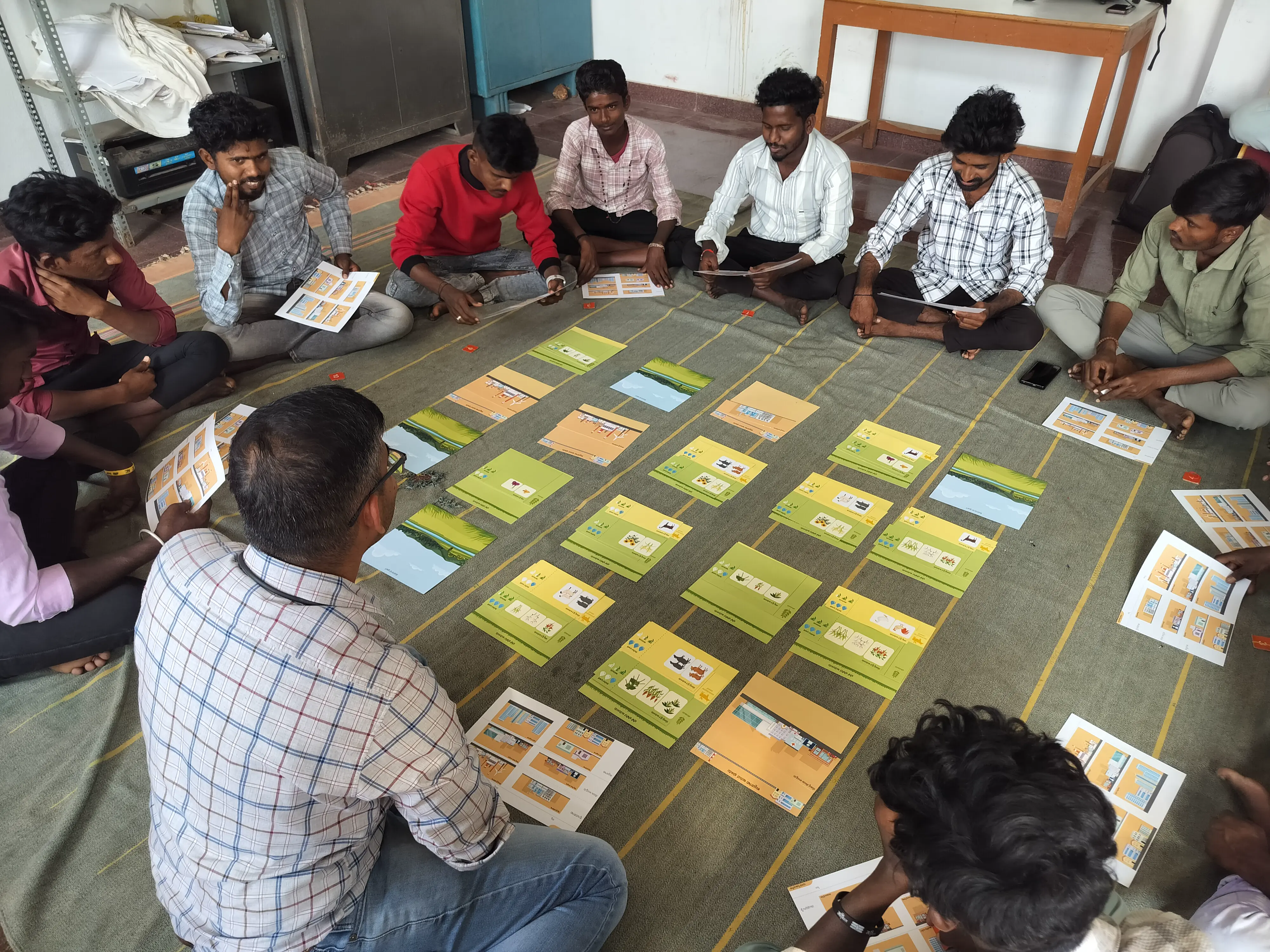
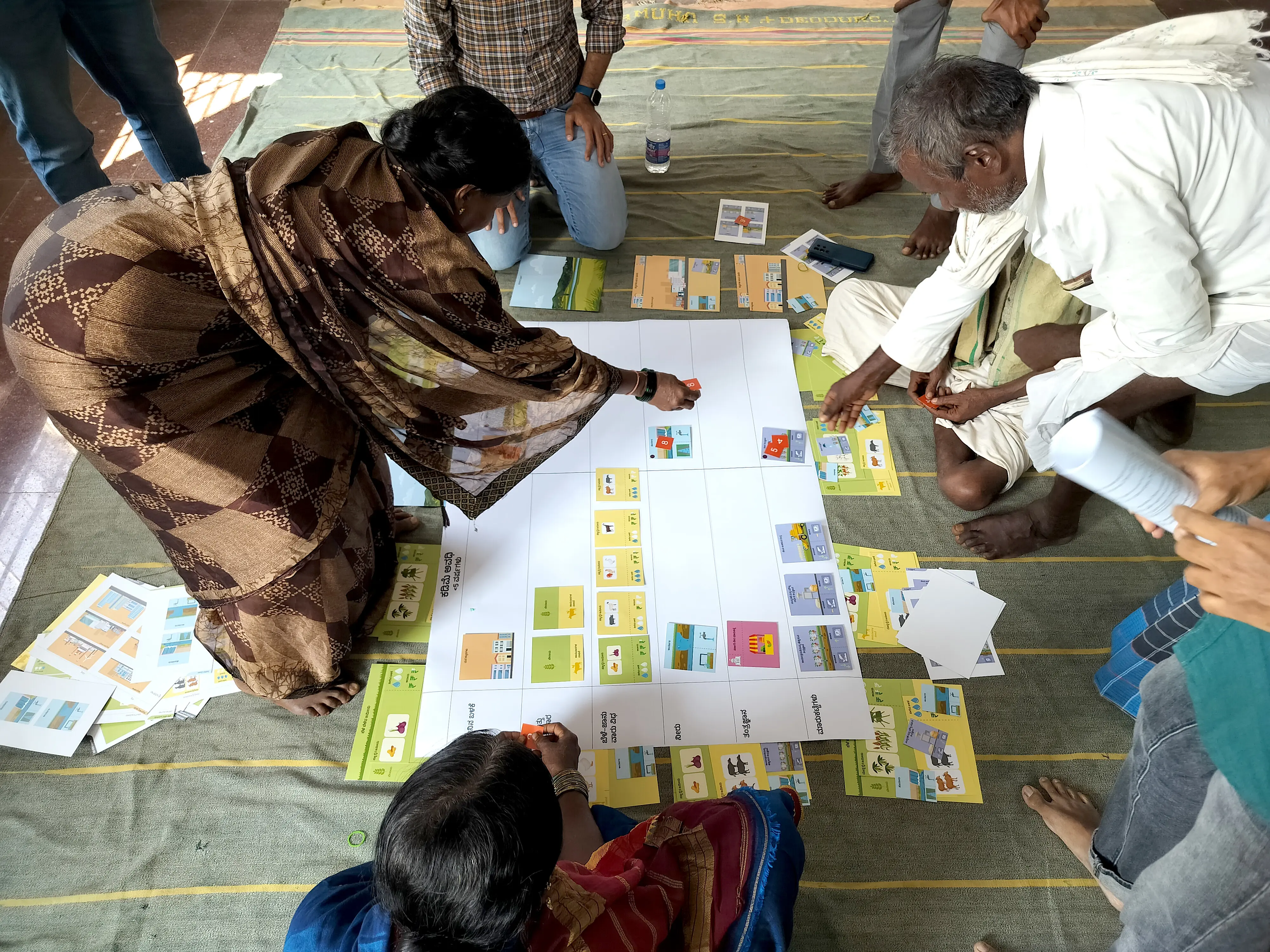
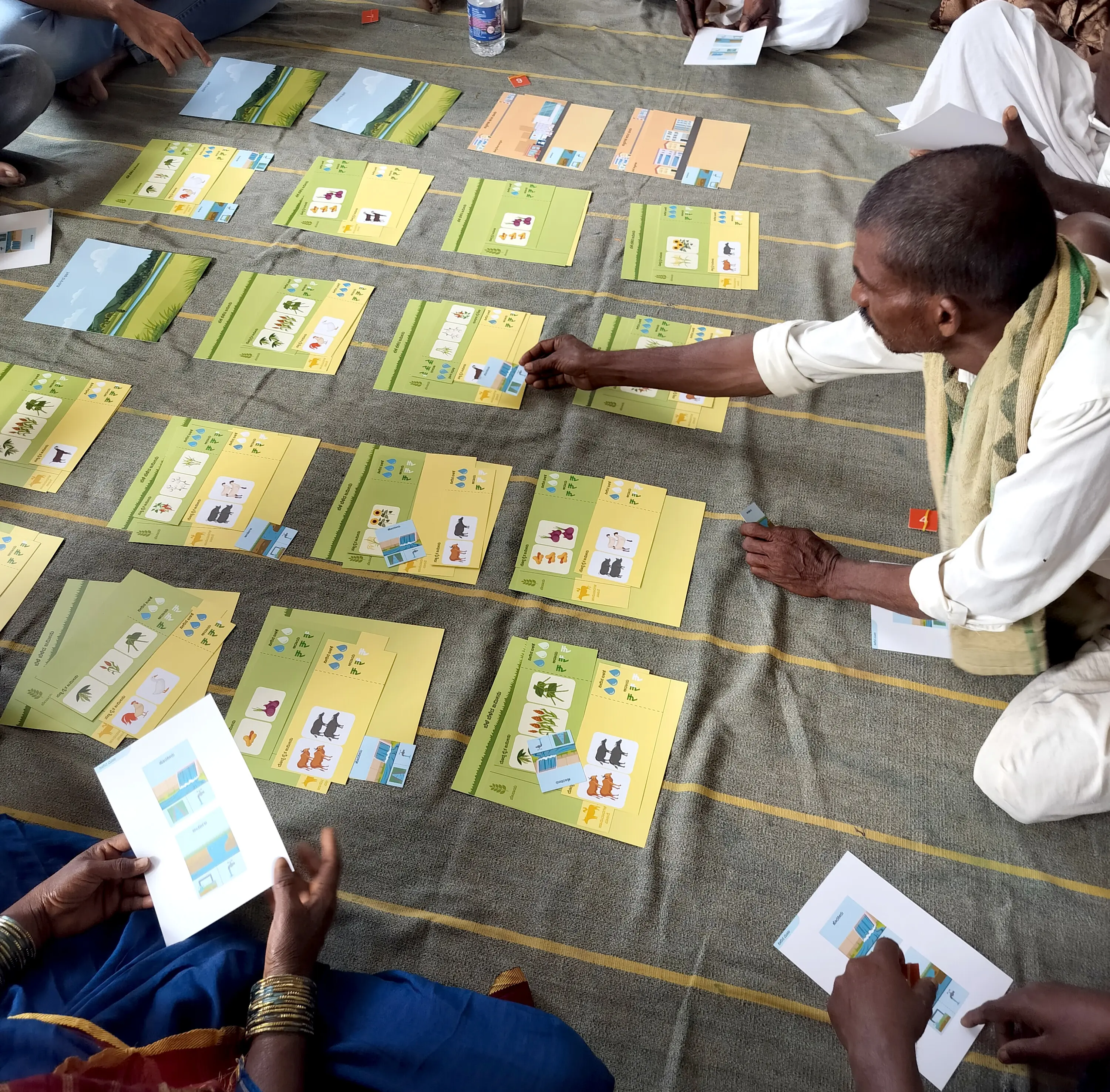
Data collection: Raichur JigsawRaichur Jigsaw is a participatory game that captures the aspirations that farmer groups have for Raichur in 2050. Participants create a shared artefact representing their desired future through dialogue on the ideal land use, the activities happening on the land, water systems for these activities, and technological support.
Participants play as themselves as they deliberate on the different features of Raichur. Through dialogue, they attempt to reach a consensus on what the different aspects of Raichur should look like in 2050. The aspirations of the group are concretised as a vision for Raichur through voting. The conversations help identify collective needs and priorities that can serve as a benchmark while conceptualising pathways towards the future.
Decision Support: Planning GameThis tool is currently under development.
The Planning Game is a physical game that highlights the trade-offs inherent in implementing different imagined futures of a region. These imagined futures are developed from community aspirations and the potential pathways are adapted to community and stakeholder contexts.
Participants play as decision-makers responsible for implementing futures pathways in the region. During gameplay, players alter different aspects of the pathways, resulting in the precipitation of changes to different components of their imagined futures, including community income, water level, and presence of institutions. This engagement with the impact of decisions highlights the trade-offs involved in implementing different development pathways.
More about the projectPartner: